
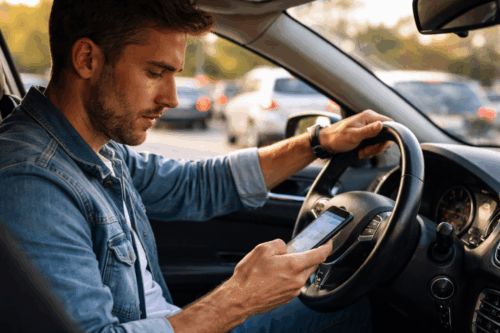
A split second. That’s all it takes. One glance at a buzzing phone. One distracted reach for a coffee cup. And suddenly, the cost of driving doesn’t just involve fuel and maintenance — it quietly balloons into higher insurance premiums that follow you for years.
Distracted driving is no longer treated as a minor misstep. Insurance carriers now view it as a measurable predictor of future losses. The result? Substantial premium increases that can hit as high as 41%, depending on where you live and who insures you.
Distracted Driving Is No Longer “Minor” in the Eyes of Insurers
Not long ago, distracted-driving violations barely moved the needle on auto insurance pricing. Today, that leniency has vanished.
Carriers now bundle distracted driving into the same risk category as aggressive behaviors like speeding or reckless operation. Why? Because claims data has told a blunt story: drivers cited for inattention file more claims, and those claims tend to cost more.
From an underwriting perspective, distraction signals unpredictability — and unpredictability is expensive.
Why Insurance Rates Spike After a Distracted Driving Ticket
Insurance pricing revolves around probability. When a distracted-driving citation appears on your motor vehicle record, insurers interpret it as evidence of elevated risk. That single data point can trigger:
- Immediate premium surcharges at renewal
- Loss of safe-driver or claims-free discounts
- Reduced eligibility for preferred carriers
- Higher deductibles or restricted coverage options
And unlike a parking ticket, this violation doesn’t fade quickly. Many carriers factor distracted-driving citations into pricing models for three to five years.
How Much More Could You Pay?
While average rate increases often land in the mid-teens, drivers in certain states experience far steeper penalties. In high-impact regions, a distracted-driving conviction can inflate premiums by up to 41% — a jump that easily translates into hundreds or thousands of dollars over time.
That increase compounds when paired with:
- Prior violations
- At-fault accidents
- Younger or inexperienced drivers
- Commercial or fleet vehicle usage
Distracted Driving Goes Beyond Phones
Texting is only part of the problem. Insurers consider many behaviors “distracted,” including:
- Adjusting navigation systems while driving
- Eating or drinking behind the wheel
- Interacting with passengers
- Reaching for objects inside the vehicle
- Using in-vehicle entertainment controls
If it pulls your eyes, hands, or attention away from driving, it counts.
The Long-Term Insurance Consequences
The true cost of distracted driving rarely arrives all at once. It shows up quietly — in renewals that creep upward, fewer carrier options, and reduced leverage when shopping for better rates.
In severe cases, repeated violations can even push drivers into non-standard insurance markets, where coverage is thinner and pricing is harsher.
How to Protect Your Rates (and Your Record)
The most effective strategy is also the simplest: eliminate distractions before the vehicle moves.
- Set navigation and playlists while parked
- Silence notifications or enable driving mode
- Keep both hands available and eyes forward
- Pull over if something demands attention
From an insurance standpoint, clean driving records still matter — and they’re still rewarded.
Talk to an Independent Insurance Advisor Before It Costs You
Not all carriers treat distracted driving the same way. Some penalize aggressively. Others weigh it more moderately — especially when paired with an otherwise strong driving history.
That’s where an independent agency makes a difference.
At Densmore Insurance Strategies, we help drivers and businesses navigate insurance pricing after violations, identify carriers that fit their risk profile, and uncover discounts that still apply. Whether you’re reviewing an upcoming renewal or recovering from a recent citation, having the right strategy can soften the financial blow.
Frequently Asked Questions
Does distracted driving affect insurance more than speeding?
In many cases, yes. Insurers increasingly view distracted driving as a stronger predictor of future claims than moderate speeding violations.
How long does a distracted-driving ticket affect my insurance?
Typically three to five years, depending on the carrier and state regulations.
Will my insurance company know if I get a distracted-driving ticket?
Yes. Violations appear on your motor vehicle record, which insurers regularly review at renewal.
Can switching insurance companies lower my rate after a ticket?
Sometimes. Different carriers weigh violations differently, which is why working with an independent agency matters.
Internal Linking Opportunities
- Auto Insurance Coverage Explained
- How Traffic Violations Impact Insurance Rates
- Safe Driver Discounts: What Still Qualifies
- Commercial Auto Insurance for Iowa Businesses
If you’d like, I can:
- Optimize this further for Yoast SEO
- Add local Iowa keywords
- Create a meta title & description
- Turn this into a pillar page + supporting blog cluster
Just tell me what you want next.